
Rockwool Attic Insulation in Temecula: A Homeowner’s Guide
Rockwool attic insulation in Temecula typically costs $1.80 to $3.20 per square foot installed, which runs roughly 30 – 40% more than fiberglass batts. The honest question isn’t whether Rockwool is a premium product – it is – but whether Temecula’s wildfire exposure and extreme attic heat make that premium rational. For many homes here, the answer is yes, but not for all of them. If you’d rather skip the research and get a straight recommendation for your specific house, call us at (833) 686-4248.
We’ve been installing insulation in Temecula long enough to know that what works in a coastal condo doesn’t always work in a 2003 tract home off Margarita Road. Rockwool has real advantages, but it’s frequently oversold as a universal upgrade. Let’s look at where it actually earns its price in this specific climate, and where you’re better off spending less.
Why Temecula’s Heat Changes the Rockwool Equation
Most insulation comparisons happen on paper, in a lab at 75°F. Your attic doesn’t live in a lab. A Temecula attic in August can sit at 140°F or higher for six-plus hours a day, day after day, from July through September. That sustained heat load isn’t a footnote – it’s the entire conversation.
Fiberglass loses some of its effective R-value under prolonged high heat. It’s documented, not dramatic: the material doesn’t fail, but its performance drifts as temperatures climb. Rockwool’s stone wool fibers are manufactured at over 2,000°F, which means a 140°F attic is not a stress test for them. The material holds its rated R-value consistently under heat loads that would make other products sag or underperform.
We’ve measured this in Temecula attics. The difference isn’t hypothetical – it shows up in the second-floor bedrooms that stay 10 degrees warmer than the rest of the house because the attic above them never cools down. Rockwool doesn’t magically make a 140°F attic cool, but it does slow heat transfer more predictably than fiberglass when the thermal load is relentless. For homes in Temecula’s hotter microclimates – think Redhawk, Paseo del Sol, or anywhere on the eastern side of the valley – that consistency matters more than the specs suggest.
Fire Resistance: The Site-Specific Case for Temecula
Rockwool is non-combustible and won’t ignite until temperatures exceed 1,400°F. That’s a laboratory number, but it has a real-world translation in Temecula: you live in a wildfire interface zone. Embers travel. They land in attics through gable vents and soffit gaps. And when they land on fiberglass, the kraft paper facing and the insulation itself can smolder and spread.
Rockwool doesn’t just resist flame – it acts as a fire barrier. It won’t burn, won’t melt, and won’t contribute fuel to a fire that’s already found its way into your attic. For homes along Temecula’s wildland edges – De Luz, Meadowview, the hills above Butterfield Stage Road – that’s not a marketing bullet point. It’s a difference in what happens in the first fifteen minutes after an ember intrusion.
Local building codes have tightened in recent years around attic ventilation and ember-resistant vents. Pairing those updates with a non-combustible insulation like Rockwool is a defensible upgrade, not overkill. If your home is in a mapped fire hazard severity zone, this is the single strongest reason to choose mineral wool over fiberglass.
Moisture and Mold: What Temecula’s Humidity Spikes Actually Do
Temecula gets two kinds of moisture. There’s the marine layer that creeps in from the coast on spring mornings, and there are the monsoon-season humidity spikes that roll in from the desert in late summer. Neither one lasts long, but both can push humid air into your attic where it condenses on cooler surfaces.
Rockwool is hydrophobic. Water beads on the surface and drains away rather than soaking into the fibers. Fiberglass, by contrast, can hold moisture, and once it does, its R-value drops until the material dries out. More importantly, trapped moisture in fiberglass can feed mold growth in a part of the house you rarely see until there’s a problem.
We’ve opened Temecula attics where condensation had been forming against the underside of the roof deck for months before anyone noticed. In those situations, Rockwool’s moisture resistance is a genuine insurance policy. The material doesn’t support mold growth and doesn’t absorb water the way other batt insulations can. It’s not a reason to choose Rockwool on every project, but if your attic has a history of condensation or your roof vents don’t move air as well as they should, it tips the scale.
Where Rockwool Is NOT the Right Answer
Here’s the part most Rockwool marketing skips: mineral wool is not the best tool for every job. We carry Rockwool alongside fiberglass from Knauf and CertainTeed, and spray foam systems from Icynene, because no single product wins every attic. Recommending Rockwool everywhere would be dishonest, and it would waste your money.
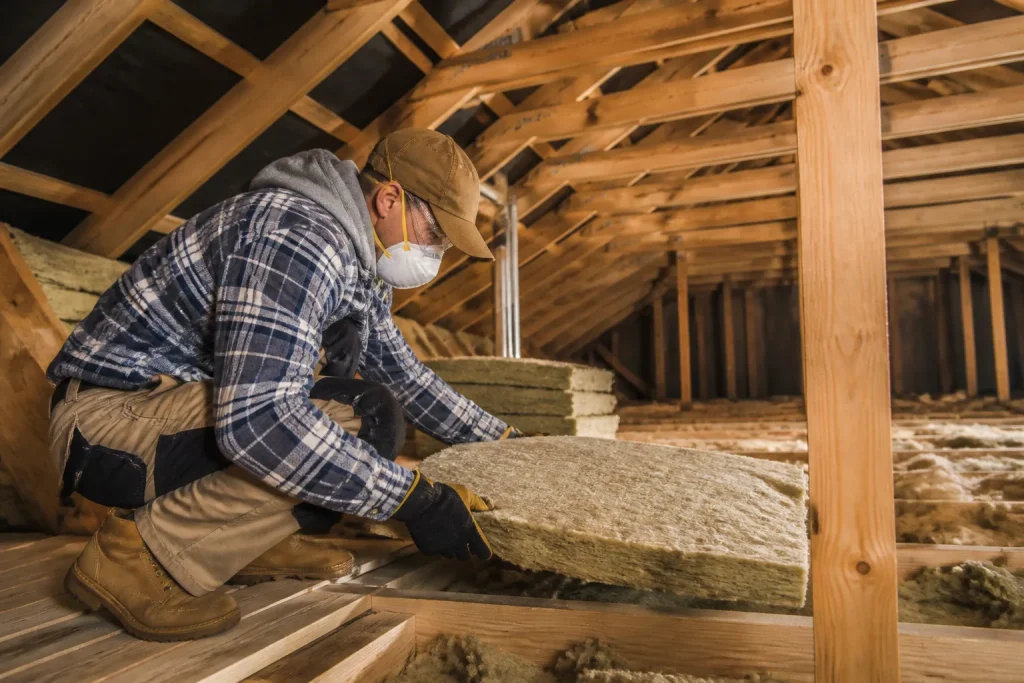
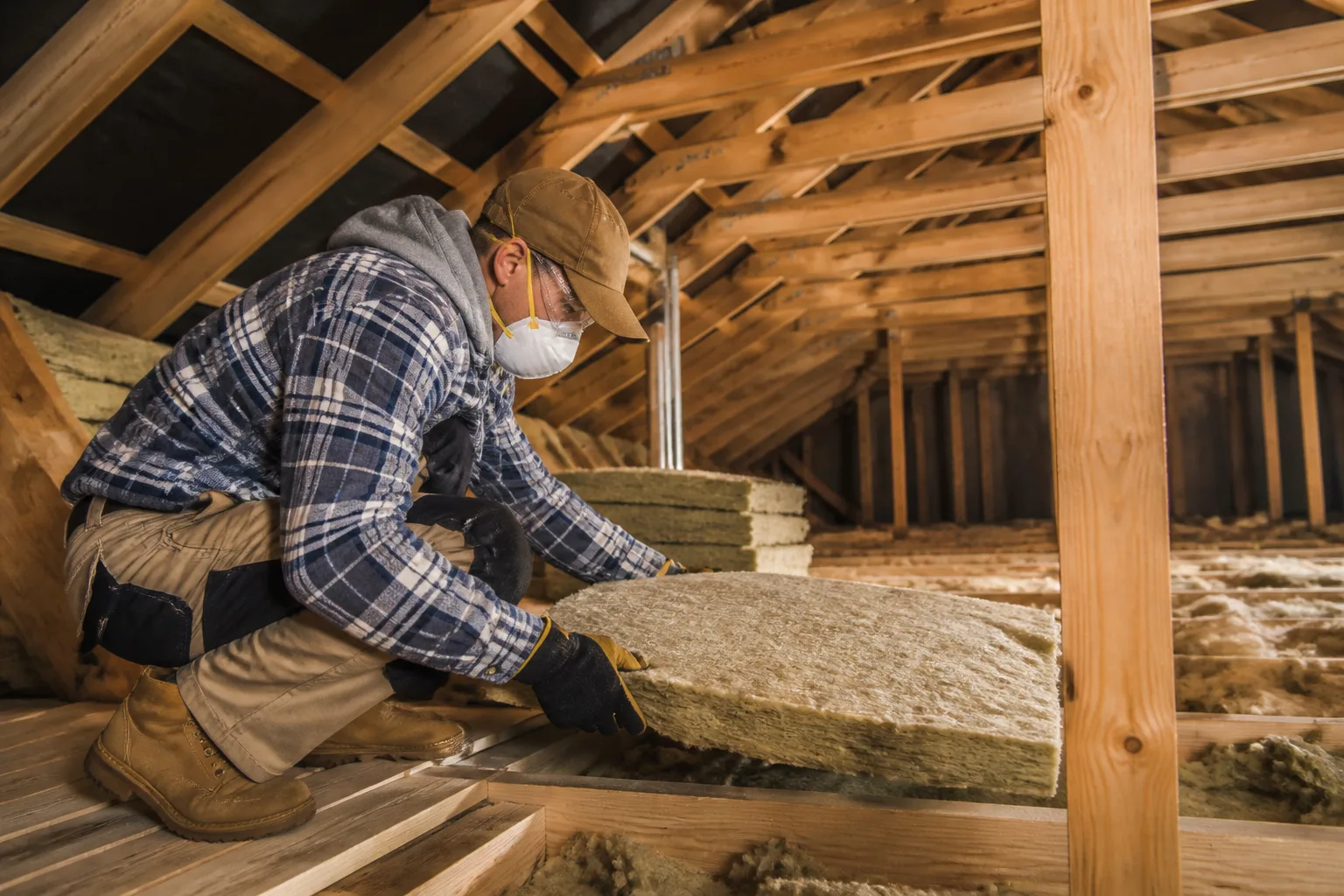
Rockwool is a batt product. It works beautifully in open attic floors, between joists, and in standard stud bays. It does not work as a dense-pack material for enclosed cavities. If you have finished attic space with enclosed rafter bays, or if you’re trying to insulate a cathedral ceiling, Rockwool batts won’t conform to those spaces the way blown in insulation in Temecula or spray foam will. In those situations, dense-pack cellulose or foam is the correct call.
Rockwool also struggles in fully enclosed rafter bays where air movement is restricted. The batts need to sit properly against all six sides of a cavity to perform. Bending them, compressing them, or forcing them into irregular spaces creates gaps, and gaps negate whatever advantage the material had.
And then there’s budget. If you have a 2,000-square-foot attic floor and you’re comparing Rockwool installed at $2.50 per square foot against blown fiberglass at $1.10, you’re looking at a difference of several thousand dollars. That’s real money. Rockwool pays for itself in fire safety, consistency under heat, and moisture resistance – but only if those things matter for your specific house. If you’re in a low-risk area, your attic ventilation is solid, and you plan to sell within five years, the premium may not come back to you.
Rockwool Cost vs. Blown Fiberglass and Cellulose: The Payback Math
Let’s talk numbers, because “premium material” doesn’t mean anything without a price tag attached. Here’s what we quote in the Temecula market for attic insulation work:
- Rockwool batts (R-30): $1.80 – $3.20 per square foot installed, depending on access, existing insulation removal, and air sealing scope.
- Blown fiberglass (R-30 to R-38): $0.90 – $1.60 per square foot installed.
- Blown cellulose (R-30 to R-38): $1.10 – $1.80 per square foot installed, with the recycled-content angle some homeowners prefer.
- Spray foam (open-cell, unvented attic conversion): $3.50 – $6.50 per square foot of roof deck, which is a different project entirely.
The payback conversation depends on your baseline. If your attic currently has R-19 fiberglass from the 1990s and you’re upgrading to R-38 with Rockwool, your energy savings might not fully cover the premium for a decade. That’s fine if fire resistance and heat consistency are your priorities. It’s less fine if you’re optimizing for upfront cost.
For most Temecula homes, the smartest comparison is Rockwool against cellulose or fiberglass on a performance-per-dollar basis, then layering in the non-energy factors: fire exposure, condensation risk, how long you plan to stay in the house. The material that wins on spreadsheet math isn’t always the material that’s right for a home backing up to Cleveland National Forest.
How Pearl Insulation Approaches Rockwool in Temecula
We’re an insulation-only contractor, which means we think about attics all day and nothing else. We carry Rockwool because it solves specific problems for Temecula homeowners. We also carry Knauf and CertainTeed fiberglass, and Icynene spray foam, because we’ve seen too many homes where the right answer wasn’t the premium one.
Our process for a Rockwool recommendation starts with the attic, not the product. We look at your existing insulation, your ventilation setup, your roof line, and whether your home sits near the wildland interface. Then we talk about budget. Then we recommend. That order matters, because it means Rockwool gets specified when the house calls for it – not when a sales target says it should be.
For a more complete look at your options, including fiberglass and spray foam, start with our guide to attic insulation in Temecula. If you’re weighing Rockwool against spray foam insulation in Temecula for an unvented attic, that’s also worth reading before you decide.
When to Call a Pro
Attic insulation work involves kneeling on joists in a 140°F space, cutting batts around framing, and making sure every bay is filled to the correct depth without compression. It’s dusty, uncomfortable work, and getting it wrong means paying for a product that won’t perform. If you’re considering Rockwool for fire resistance, that fire resistance only works if the batts are installed without gaps, compressed edges, or voids. A gap of even an inch is a thermal bypass.
If your attic has old insulation that needs removal, exposed wiring, or signs of rodent activity, bring in a professional. Same goes for any project involving air sealing – the sealing work has to happen before the insulation goes down, and it’s easy to miss rim joists and top plates if you’re not thinking about the building envelope as a system.
We pulled an attic job out of a home near Vintage Hills last month where the homeowner had attempted a fiberglass-to-Rockwool swap on their own. The batts were upside down, the facing was on the wrong side, and three bays were missed entirely behind a chimney chase. The material was right; the install undid all of it. Sometimes the best reason to hire someone is that they’ll catch what you can’t see from the crawlspace entrance.
The Bottom Line
Rockwool in a Temecula attic makes strong sense if your home sits near wildfire interface zones, your attic runs hot for months at a stretch, or condensation has been a problem. It makes less sense if your attic is well-ventilated, your fire risk is low, and your budget is the dominant constraint. The material is excellent – it’s just not universally necessary.
If you’re in Temecula and want a straight recommendation for your specific house, we’d rather climb into your attic and show you than sell you sight unseen. Pearl Insulation offers free estimates – call (833) 686-4248 and we’ll walk the attic together.
Frequently Asked Questions
For homes near Temecula’s wildland areas or with chronically hot second floors, yes. The fire resistance (non-combustible to 1,400°F) and stable R-value under sustained heat justify the premium. For low-risk homes with good ventilation and a tighter budget, fiberglass or cellulose often make more sense. Call (833) 686-4248 for a free assessment.
Installed Rockwool batts typically run $1.80 to $3.20 per square foot in Temecula, depending on access conditions, existing insulation, and air sealing scope. A 1,200-square-foot attic floor usually falls between $2,200 and $3,800. For an exact quote based on your attic, call (833) 686-4248.
Yes. Rockwool is made from stone wool and won’t ignite until temperatures exceed 1,400°F. In a wildfire ember event, it does not burn, melt, or fuel the fire, unlike kraft-faced fiberglass. This is a meaningful difference for Temecula homes in mapped fire hazard severity zones.
No. Rockwool works well in open attic floors and standard joist bays, but it’s not suited for enclosed rafter bays, cathedral ceilings, or dense-pack applications. In those cases, blown in insulation or spray foam is the better method. A quick attic inspection can tell you which one fits your structure.
Written by the team at Pearl Insulation, serving Temecula since 2011. We work exclusively in insulation – attic, spray foam, and blown-in – and carry Rockwool, Knauf, CertainTeed, and Icynene so the right material can be matched to your home.
Need Insulation Help?
Call Pearl Insulation — licensed & insured, here with fast after-hours help in Temecula.
(833) 686-4248