
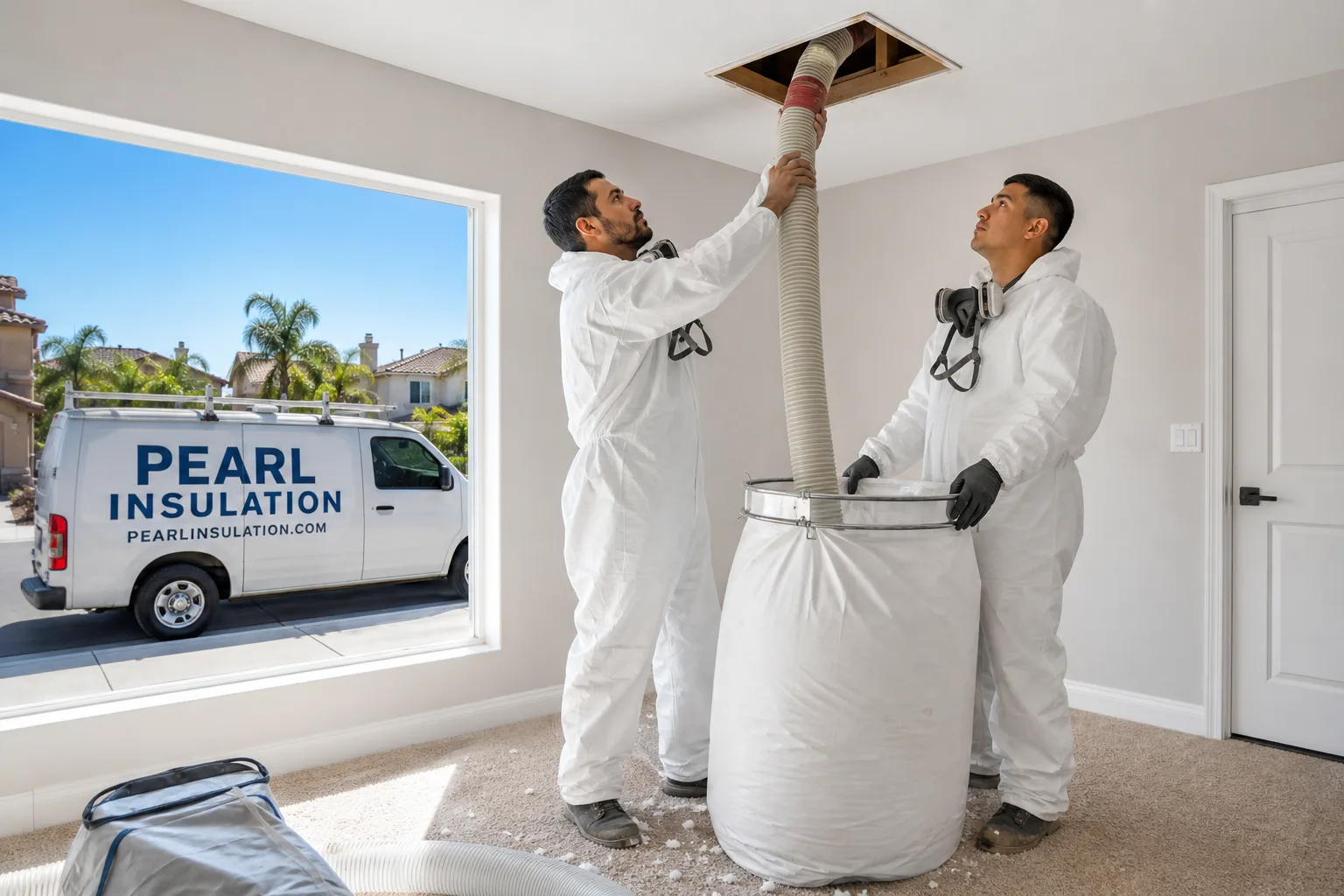
Fast, Reliable Spray Foam Insulation Across San Joaquin Hills
Spray foam insulation in San Joaquin Hills costs between $2,800 and $7,500 for a typical rim joist or wall cavity project, depending on square footage and whether you need open-cell or closed-cell foam. Most jobs in the 92657 zip code wrap up in one to two days once we’re on site. If your energy bills spike during canyon heat-ups or you’re seeing moisture stains on garage ceilings during fog season, call Pearl Insulation at (833) 686-4248 for a free estimate. We know these ridgeline homes and the specific ways coastal air works against them.
Why Pearl Insulation Is San Joaquin Hills’s Preferred Spray Foam Insulation Company
We work exclusively in insulation. That focus matters in San Joaquin Hills, where homes built into coastal canyons demand detailing that general contractors miss. Roland Sifuentes leads our team, and he’s built our approach around one principle: carry competing brands because no single product wins every job. For a 1990s stucco home off Ridge Route Road with salt-saturated air and afternoon canyon heat, the right foam might be a Demilec closed-cell system. For an interior wall pack in a remodeled Laguna Terrace property, open-cell Icynene often makes more sense. We install both, along with Rockwool and CertainTeed where mineral wool or batt products serve the structure better.
Our crews reach San Joaquin Hills within about an hour from Temecula. We’ve worked homes along Newport Coast Drive, throughout the Canyon Crest area, and up along the ridgelines where fog sits longest in the mornings. Homeowners here don’t just want insulation; they want someone who understands why their attic sweats in July and their rim joists stay damp in May. That’s the conversation we have every week in this community.
Spray Foam Wall Insulation in San Joaquin Hills
Spray foam wall insulation for a San Joaquin Hills custom home runs $4,200 to $9,800 for a full exterior wall retrofit, and it’s the most effective fix for the thermal bridging that plagues these multi-level stucco designs with heavy glazing. When you have floor-to-ceiling windows facing the ocean and a wall cavity that heats to 90 degrees by 2 p.m. then chills under marine layer by 7 p.m., the wall assembly needs an air barrier that also insulates. That’s what spray foam does that fiberglass can’t.
Detailing Wall-to-Roof Junctions
In San Joaquin Hills homes with complex rooflines, the wall-to-roof junction is where cold spots form and condensation collects. We over-spray these transitions and tie the foam into the attic plane so there’s no gap for air to move through. Skipping this step is why some foam jobs still leave homeowners with damp drywall in coastal-canyon bedrooms.
Open-Cell vs. Closed-Cell for Coastal Walls
For most wall cavities on ocean-facing slopes, we recommend open-cell foam for its sound control and forgiving expansion. But where a wall backs against a retaining cut or sits low on a canyon slope, closed-cell gives you a vapor retarder and structural rigidity that open-cell won’t. We’ll walk you through which fits your home rather than defaulting to one product.
Rim Joist Spray Foam in San Joaquin Hills
Rim joist spray foam in San Joaquin Hills typically runs $2,800 to $5,600 for a full rim on a 3,000-square-foot two-story, and this is the single highest-impact air-sealing job we do in the 92657 area. The rim joist is the wood band running around the perimeter of your house where the floor framing meets the foundation. In this coastal environment, it’s also the coldest, least-ventilated cavity in the entire structure.
Why Marine-Layer Condensation Hits the Rim Joist First
Homes on ocean-facing ridges in San Joaquin Hills collect condensate in rim joist bays because the fog that keeps summers mild soaks into the coldest cavity of the house. Fiberglass batts stuffed into those bays trap that moisture against the band joist instead of sealing it out. We’ve opened bays above Laguna Beach where the batts were saturated and the wood was starting to stain. Once we remove the wet material, seal the sill and penetrations, and spray closed-cell foam at the rim, the condensation stops because warm interior air can’t reach the cold wood anymore.
Vapor and Air Barrier in One Pass
We typically use Icynene closed-cell for rim joists in San Joaquin Hills because it acts as both a vapor and air barrier in a single application. That matters on ocean-facing slopes where wind-driven moisture pushes against the assembly from outside while interior humidity does the same from inside. On a ridge-top home above Laguna Beach, we opened rim joist bays to find fiberglass batts soaked and the band joist starting to stain from marine-layer condensation. We removed the wet batts, sealed the sill and penetrations, and sprayed closed-cell foam to create a vapor-and-air barrier at the rim. The attic dried out, and the homeowner stopped seeing moisture stains on the garage ceiling below.
Trusted Brands We Service in San Joaquin Hills
We’re an authorized installer of eight leading insulation brands, including Reflectix service in San Joaquin Hills, and for this area we lean heavily on Icynene and Demilec for spray foam work, with CertainTeed and Rockwool available where batts or mineral wool fit the application. Because we carry competing lines, our recommendation comes from your home’s age, orientation to the ocean, canyon exposure, and air-sealing goals, not from what’s easiest to source. We keep local stock staged for San Joaquin Hills jobs, which means less waiting when we identify a material need mid-project.
Our Spray Foam Insulation team handles open-cell, closed-cell, rim joist, garage ceiling, and roof deck applications across Orange County. For a broader look at how we serve this community, see our San Joaquin Hills service overview.
Common Spray Foam Insulation Problems We See in San Joaquin Hills Homes
- Marine-layer condensation wetting rim joist bays: On ocean-facing slopes, the persistent morning fog drives moisture into unsealed rim cavities where fiberglass batts hold it against the band joist. We see staining and early rot in homes as new as 15 years old because the original insulation was never detailed for coastal humidity.
- Thermal bridging at wall-to-roof junctions in high-ceiling homes: The open floor plans and extensive glazing common in San Joaquin Hills custom builds create cold corners where walls meet complex rooflines. Spray foam that isn’t carried through those junctions leaves condensation points that show up as ceiling stains in upstairs bedrooms.
- Canyon heat-up against cool coastal mornings stressing attic penetrations: The diurnal temperature swing inland canyon areas experience can pull moisture through poorly sealed attic penetrations. That degrades foam adhesion at roof-deck transitions over time, especially where tile roofs hold heat through the afternoon.
- Fiberglass in rim bays acting as a sponge rather than a seal: We frequently find batts that look fine from the living space but are saturated behind the band joist. The failure is hidden, and by the time a homeowner sees staining on the garage ceiling, the moisture problem has been active for months.
Pricing for Spray Foam Insulation in San Joaquin Hills, CA
Expect to pay $2,800 to $5,600 for rim joist spray foam, $4,200 to $9,800 for full wall cavity retrofits, and $3,100 to $6,700 for garage ceiling or roof deck applications in San Joaquin Hills. Closed-cell foam runs higher per board foot than open-cell, and homes on steep ocean-facing slopes sometimes require additional prep for access and moisture detailing. Tile roofs, stucco exteriors, and multi-level designs all influence labor time. Call (833) 686-4248 for a line-item estimate specific to your home’s square footage and exposure. Estimates are free, and we’ll tell you honestly if spray foam is not the right material for a given area.
We Also Serve Cities Near San Joaquin Hills
Pearl Insulation handles spray foam work throughout southern Orange County. In addition to San Joaquin Hills, our crews regularly serve Spray Foam Insulation in San Joaquin Hills neighbors in Aliso Viejo, Newport Beach, Laguna Beach, and Irvine. If you’re in a canyon-adjacent neighborhood or up on the ridges, we’re already familiar with the microclimates and building styles in your area.
Serving San Joaquin Hills, CA — Our Local Coverage Area
We’re based in the San Joaquin Hills area and know this community well. Use the map below to see our service coverage — if you’re nearby, we can almost certainly help.
FAQs About Spray Foam Insulation in San Joaquin Hills
Your garage ceiling stains during fog season because marine-layer moisture is condensing in the rim joist cavity above the garage, where cold exterior air meets warm interior air leaking through unsealed gaps. Fiberglass batts absorb that condensation and hold it against the band joist, and the moisture eventually migrates through the drywall below. We fix this by removing the wet material, sealing the sill and penetrations, and spraying closed-cell foam that stops air and vapor movement at the rim. Call (833) 686-4248 to have us inspect your rim bays, free of charge.
Spray foam does make sense on an ocean-facing San Joaquin Hills ridge home, provided you choose the right formulation and install it with coastal detailing. Closed-cell foam acts as a vapor retarder, which is what you want when fog saturates the exterior air and wind drives moisture against the building. The key is sealing all penetrations and carrying foam through wall-to-roof junctions so there are no cold spots left for condensation to form on. Done properly, the foam reduces moisture problems rather than trapping them.
The canyon heat-up in inland San Joaquin Hills areas creates a wide diurnal temperature swing that stresses insulation by expanding and contracting materials and pulling moist air through small gaps. Spray foam’s continuous air seal makes it more resilient to that swing than batt insulation, which loses performance at gaps and seams. We detail attic penetrations and roof-deck transitions specifically for these temperature cycles so adhesion holds over time. Homeowners in canyon pockets benefit most from an air-sealed assembly that doesn’t breathe with the daily temperature shift.
Yes, a 1990s stucco home with a tile roof in San Joaquin Hills is a straightforward rim joist spray foam candidate, and it’s one of the most common jobs we do in the 92657 zip code. The stucco exterior and tile roof don’t interfere with rim access from inside the crawl space or basement. We remove any existing fiberglass, address moisture staining if present, seal the sill and penetrations, and spray closed-cell foam to create the air and vapor barrier these coastal homes need.
For coastal San Joaquin Hills homes, we primarily use Icynene and Demilec spray foam systems, both closed-cell and open-cell depending on the application. These are two brands specified in high-performance residential builds, and we’re authorized installers for both. Where mineral wool or batt products fit the job better, Rockwool and CertainTeed are available from the same Pearl team. Call (833) 686-4248 and we’ll recommend the right material for your home’s specific exposure and construction, not just the one product we happen to carry.
Written by Roland Sifuentes, Owner at Pearl Insulation, serving San Joaquin Hills since our first coastal retrofit project.