
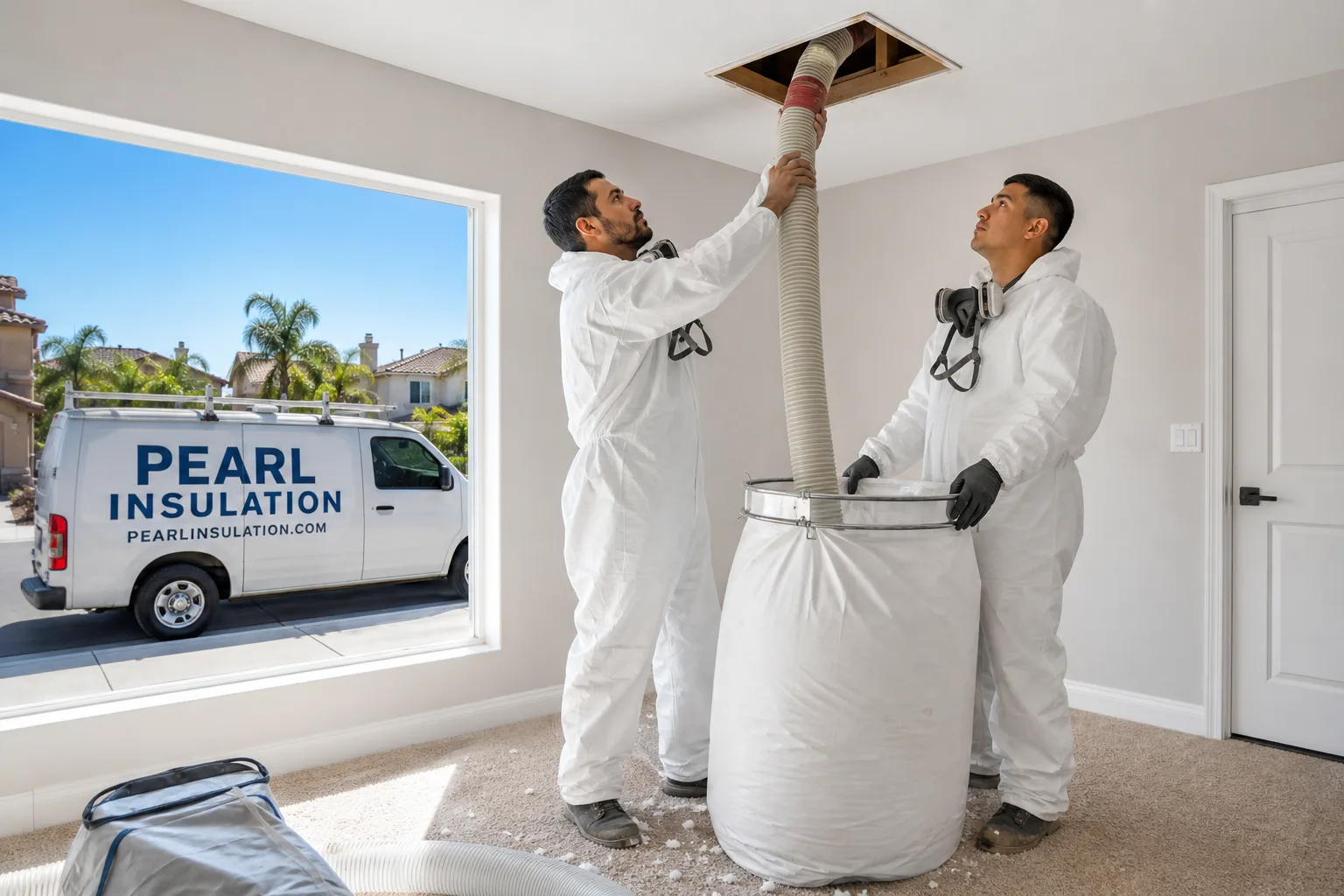
Fast, Reliable Spray Foam Insulation Across Trabuco Canyon
Spray foam insulation in Trabuco Canyon typically runs $2.80 to $6.50 per board foot installed, with most whole-attic jobs landing between $3,800 and $9,600 depending on foam type and square footage. We get crews into Trabuco Canyon same week in most cases, and often same day for smaller jobs like a garage ceiling or rim joist. This canyon throws two very different problems at homes: damp, shaded creek-bottom conditions and dry, ember-exposed ridge-top heat. Pearl Insulation specs for both, because the right foam in the wrong microclimate is just an expensive mistake. Call (833) 686-4248 and we’ll talk through what your specific Trabuco Canyon home actually needs.
Why Pearl Insulation Is Trabuco Canyon’s Preferred Spray Foam Insulation Company
Trabuco Canyon homeowners call us because we carry both Icynene and Demilec spray foam systems, which means we’re not tied to pushing one product line. That matters here. A creek-bottom cabin on Trabuco Creek needs a moisture-tolerant open-cell application with careful air-sealing detail, while a ridge-top home off Trabuco Canyon Road needs closed-cell density and ember-resistant vent treatment. We’ve done both within the same week in the 92678 and 92679 ZIP codes, and we know the difference between the two specs by heart because we’ve walked both kinds of properties.
Roland Sifuentes built Pearl Insulation as a single-trade shop. Insulation is all we do. That focus means our techs can talk framing, dew points, and R-value targets with a depth you won’t get from a general contractor who installs insulation between kitchen remodels. Trabuco Canyon homeowners tend to be self-reliant and ask sharp questions. We like that. We show up prepared to answer them.
Looking for a specialist who knows Spray Foam Insulation across every application method? That’s what we do, every day, for homes like yours in Trabuco Canyon.
Garage Spray Foam Insulation in Trabuco Canyon
Garage Spray Foam Insulation is one of the most common calls we take from Trabuco Canyon homeowners, and for good reason: canyon garages pull double duty as workshops, storage rooms, and in many rural properties, the main entry point for damp air and pests. We spray garage ceilings, rim joists, and wall cavities with closed-cell or open-cell foam depending on whether the space is conditioned or not, and we always check how the added foam interacts with door hardware. A typical garage ceiling spray foam job in Trabuco Canyon runs $1,400 to $3,200 for a two-car footprint, with rim joist work adding $800 to $1,500.
Moisture Paths Along the Door Frame
Creek-bottom garages in Trabuco Canyon fight a constant battle with damp air pushing through unsealed door framing. Closed-cell foam applied to the perimeter stops the vapor path before it reaches the door track and hardware. We also verify that the foam isn’t trapping moisture that could corrode hinges or springs over time.
Garage Door Weight and Opener Load
When we add closed-cell foam to a garage ceiling or walls, the door itself isn’t changing weight, but insulation on the door panel does. If a homeowner later adds foam board or a foam-injected door, the opener’s spring rating matters. We flag this during the walkthrough so you’re not surprised by a strained opener six months down the road.
Closed Cell Spray Foam Insulation in Trabuco Canyon
Closed Cell Spray Foam Insulation is the workhorse we recommend for most Trabuco Canyon ridge-top and foothill homes because it delivers both high R-value per inch and structural air-sealing in one pass. It’s foam that cures rigid, blocks bulk water, and adds shear strength, which is why we lean on it for sloped attic decks and rim joists throughout the 92679 ZIP. Closed-cell jobs in Trabuco Canyon run $3.10 to $6.50 per board foot depending on depth, with a standard 2-inch attic deck application on a 1,500-square-foot home typically landing between $4,600 and $7,800.
Ember Resistance and Vent Sealing
Ridge-top Trabuco Canyon homes face Santa Ana wind events that push embers against attic vents and soffits. Closed-cell foam seals the gaps, but the vent itself still has to be addressed. We flash and seal around vent openings so the foam’s air barrier actually means something when fire season arrives.
Sloped Attic Decks and Irregular Framing
Hillside tract homes in 92679 often have attics with steep pitches and awkward knee-wall transitions. Closed-cell foam adheres directly to the roof deck, which lets us insulate the actual thermal boundary without fighting odd cavities. For older canyon cabins with irregular framing, this same adhesion quality fills the gaps batt insulation leaves behind.
Trusted Brands We Service in Trabuco Canyon
Pearl Insulation installs Icynene and Demilec spray foam, plus CertainTeed batts and GreenFiber blown-in cellulose when a hybrid spec fits better. We stock enough material locally to serve Trabuco Canyon without a second sourcing trip for most jobs. That matters when a canyon homeowner wants the work done in one visit and doesn’t want to hear that the foam order got shorted. We also service what we install: if a past spray foam application in Trabuco Canyon needs inspection or repair, we’ll send a tech who actually knows the product, not a sub who’s guessing.
Common Spray Foam Insulation Problems We See in Trabuco Canyon Homes
- Creek-bottom damp defeating closed-cell adhesion. Foam sprayed onto damp, rusted, or dusty framing along Trabuco Creek won’t bond correctly, and a poor bond means gaps you can’t see from the living room. We surface-prep and dry the substrate before spraying.
- Ember intrusion through unsealed attic vents. In foothill homes near the Santa Ana Mountains, foam air-sealing without vent flashing leaves an ember path that bypasses all the hardening work. This is a fire-safety issue, not just a comfort one.
- Foam weight and spring fatigue on heavy garage doors. Ridge-top Trabuco Canyon homes often have oversized or heavy steel doors on big openers. When insulation is added to the door or the surrounding framing changes air pressure, spring ratings need a second look.
- Moisture trapping in irregular cabin framing. Older canyon cabins with retrofitted insulation and non-standard stud bays can trap moisture if open-cell foam is used where closed-cell should be. We read the microclimate first, then choose the foam.
Pricing for Spray Foam Insulation in Trabuco Canyon, CA
Spray foam pricing in Trabuco Canyon follows a few clear lines. Open-cell attic applications run $2.80 to $4.20 per board foot. Closed-cell runs $3.10 to $6.50 per board foot, with the higher end reserved for ridge-top homes that need deeper applications and vent-sealing detail work. A full attic spray foam job in a 1,800-square-foot Trabuco Canyon home typically lands between $4,200 and $8,900, while garage ceiling and rim joist projects start around $1,400. The two biggest variables on this side of the canyon are access conditions and whether we’re addressing creek-bottom moisture or ridge-top ember sealing. Both change prep time. We quote free and we quote specific. Call (833) 686-4248 for a number that reflects your actual square footage and microclimate.
We Also Serve Cities Near Trabuco Canyon
Pearl Insulation runs crews into Rancho Santa Margarita, Foothill Ranch, Portola Hills, and Coto De Caza on a weekly basis. If you’re in one of those communities and need spray foam, blown-in, or attic insulation, call the same number: (833) 686-4248. We’ll schedule a Trabuco Canyon-area visit just as fast as a local one.
Serving Trabuco Canyon, CA — Our Local Coverage Area
We’re based in the Trabuco Canyon area and know this community well. Use the map below to see our service coverage — if you’re nearby, we can almost certainly help.
FAQs About Spray Foam Insulation in Trabuco Canyon
Closed-cell spray foam is the right answer for creek-bottom damp because it cures rigid and blocks bulk water and water vapor, which open-cell cannot do reliably in a high-moisture environment. We also address air-sealing details around door frames and rim joists where Trabuco Creek moisture pushes into garages and crawl spaces. Call (833) 686-4248 and we’ll tell you which side of the canyon you’re on and what that means for your foam spec.
Yes, but only when paired with vent and soffit sealing. Spray foam itself blocks air and ember paths through gaps, but the vents remain weak points if left unflashed. We seal around attic vents, soffit transitions, and gable ends so the foam’s air barrier contributes to the home’s overall ember hardening. For a ridge-top Trabuco Canyon home, this dual approach is the whole point.
Spray foam applied to the garage ceiling or walls doesn’t change the door’s weight, but adding insulation to the door panel itself does, and that extra weight can accelerate spring fatigue on older openers. We check the spring rating and opener duty cycle as part of our walkthrough and tell you before work starts if an upgrade makes sense. Better to catch it during the estimate than have the door sag in July.
Open-cell foam expands more and costs less per board foot, which makes it tempting for irregular framing, but in a damp creek-bottom cabin it can hold moisture against wood. Closed-cell foam adheres, blocks vapor, and adds structural strength even in odd stud bays. For most canyon-bottom cabins in 92678, we recommend closed-cell at the rim joist and band board and open-cell only in conditioned, well-ventilated attic space.
Sloped attic decks in Trabuco Canyon’s hillside tract homes are typically insulated at the roofline with closed-cell foam sprayed directly to the sheathing. We work deck by deck, staying inside the thermal boundary, and we extend sealing down to the knee walls and soffit transitions. This avoids the cold corners and airflow bypasses that batt insulation always leaves behind on a sloped lot.
Written by Roland Sifuentes, Owner at Pearl Insulation, serving Trabuco Canyon and the surrounding foothill communities with spray foam, attic, and blown-in insulation expertise.
Ready to spec your Trabuco Canyon insulation job? Call (833) 686-4248 for a free estimate, or ask for Roland directly. We’ll talk through your microclimate, your framing, and what foam actually fits before anyone starts spraying.