
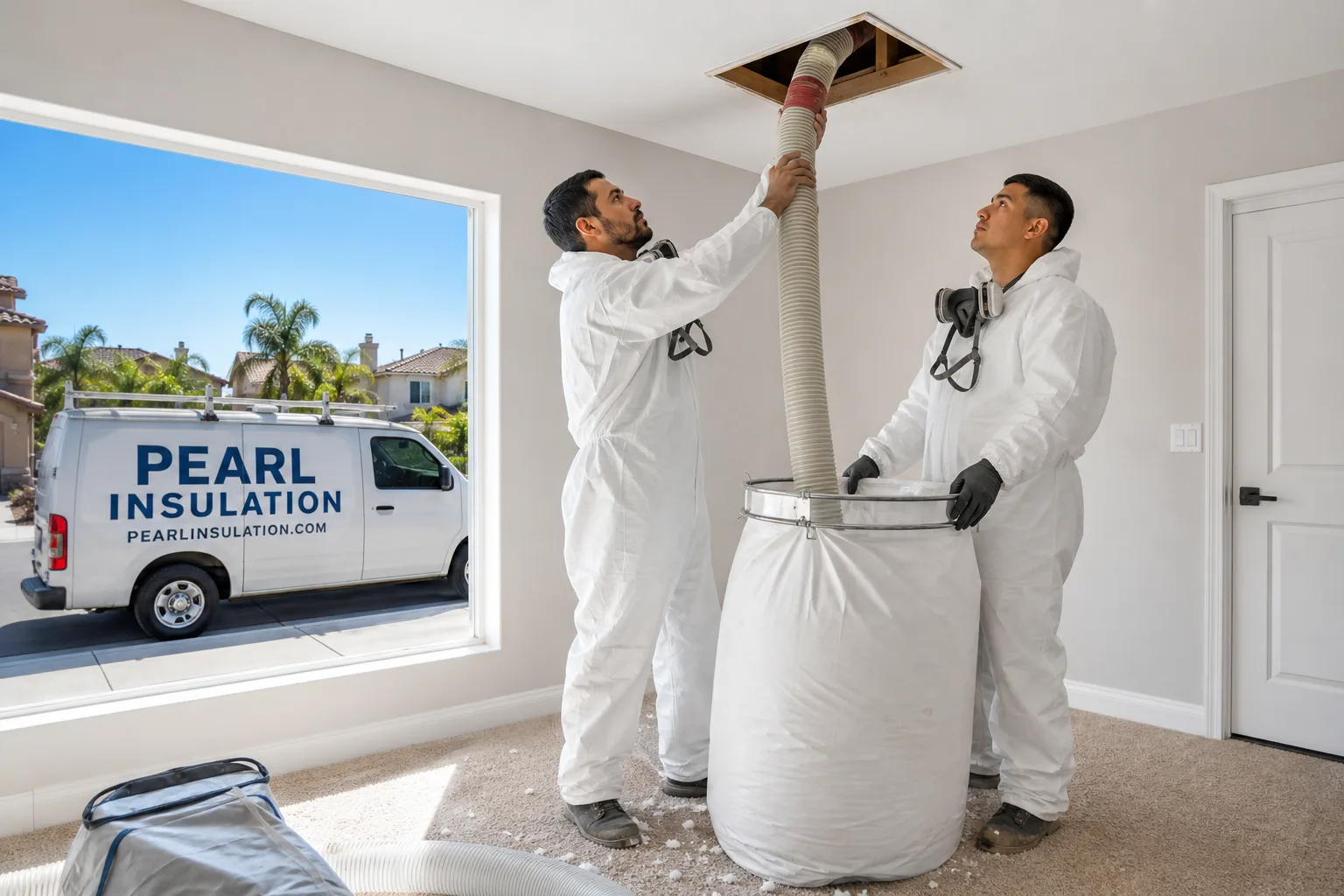
Fast, Reliable Attic Insulation Across March Air Force Base
Attic insulation in March Air Force Base has to handle a 40-degree daily temperature swing, not just summer heat. Our crews work the 92551 ZIP weekly, so we know how the truck and rail traffic around March ARB affects the insulation in base-adjacent tract homes. You’ll get a straight answer on whether your attic needs air-sealing, new insulation, or both. Call (833) 686-4248 for a free estimate, and we’ll be out to your March Air Force Base home fast.
Why Pearl Insulation Is March Air Force Base’s Preferred Attic Insulation Company
Most insulation companies in this area treat the job as a one-material fix. We don’t. Pearl Insulation carries fiberglass, mineral wool, spray foam, and cellulose across eight brands, including Owen Corning, Rockwool, Icynene, and Demilec. That means a March Air Force Base homeowner isn’t pushed into whatever product happens to be on the truck that week.
Roland Sifuentes built Pearl around a single trade: insulation. No roofing, no windows, no side work. When a crew shows up at a 92551 home, they’re looking at the attic as a system, vents, air gaps, and the existing material’s actual condition, not just adding R-value on top of a failing envelope. That focus is why homeowners around Van Buren Boulevard and the March/Mead Valley edge keep calling us back.
We also know the 92551 housing stock. Mid-20th-century base-era tract homes with vented, wood-frame attics. Newer infill rental units. Tight townhome attics off Cactus Avenue. Each one needs a different approach, and that’s the part we actually enjoy figuring out.
Attic Ventilation in March Air Force Base
Attic Ventilation in March Air Force Base fails differently than it does almost anywhere else. The constant truck and rail logistics traffic around March ARB kicks fine dust into the air, and that dust settles in soffit vents until airflow chokes off. A ventilated attic keeps the temperature in check; a clogged one turns into a heat trap that bakes the insulation below it.
Dust-Clogged Soffit Vents and Stalled Airflow
Soffit vents pull outside air into the attic and push hot air out through roof vents. When dust from the base or the warehouse corridors near the 215 clogs those soffit openings, the whole system stalls. Heat and moisture build up, the insulation gets baked from above, and the home’s ceiling starts radiating that heat down into living spaces. We clear the vents first, then assess whether the insulation below has been compromised.
Ventilation Before Insulation, Every Time
“Should I ventilate before I insulate?” Yes, in March Air Force Base, that order matters. Adding new insulation over a poorly ventilated attic means trapping heat and moisture inside the assembly. That’s how you get premature shingle wear, warped decking, and an attic that hits 140°F. A proper vent assessment runs $150 to $450 depending on access and scope, and it’s the most cost-effective prep step before any material goes in.
Radiant Barrier in March Air Force Base
Radiant Barrier in March Air Force Base makes more sense here than in coastal Riverside, because inland summer highs routinely top 100°F and your attic is absorbing that heat for six hours straight. A radiant barrier reflects radiant heat away from the living space before it ever reaches the insulation. In 92551 homes with dark-shingle roofs and west-facing attics, that’s a meaningful difference on July afternoons.
When a Radiant Barrier Pays Off Here
A radiant barrier works best in hot climates with high attic temperatures, which is exactly the March Air Force Base summer profile. It’s installed under the roof decking, facing an air gap, so it reflects rather than absorbs heat. Homes with HVAC equipment in the attic see the fastest return, because the air handler isn’t fighting a 130°F ambient temperature all afternoon.
What It Costs and What It Doesn’t Do
A radiant barrier installation in a typical March Air Force Base home runs $1,200 to $2,800, depending on attic size and access. It isn’t a replacement for insulation, and we’ll tell you that plainly. It’s a supplement that reduces heat gain at the roofline so your insulation doesn’t have to work as hard. Paired with fresh blown-in material, it’s one of the more effective upgrades for west-facing 92551 homes.
Trusted Brands We Service in March Air Force Base
We’re authorized installers for Rockwool, CertainTeed, Icynene, and Demilec, plus the full Owens Corning, Johns Manville, Knauf, and GreenFiber lines. That’s not a vendor list to us, it’s a decision matrix. A March Air Force Base home with fire-safety priorities and a noisy flight path might get Rockwool. A tight-access townhome attic off Cactus Avenue might get Demilec spray foam. We stock local parts for 92551 jobs, which means less waiting on a supply run and faster turnaround for your attic.
Common Attic Insulation Problems We See in March Air Force Base Homes
- Dust-compacted insulation that lost its R-value early. Logistics dust from March ARB settles into attic material and compacts it over time. The batts or blown-in fill don’t fail by wearing out; they get packed flat and gray, losing thermal performance long before their rated life is up.
- Soffit vents clogged with airborne dust. Choked vents shut down attic airflow, trapping heat and moisture. We find this on nearly every base-adjacent home we open up, and it usually matters more than the insulation itself.
- Unsealed blower-door gaps from high rental turnover. Many 92551 homes are rentals where insulation and air-sealing upgrades have been deferred for years. Cold air leaks in at night and hot air pours in during the day, so even decent insulation can’t hold up to the 40-degree daily swing.
- Tight-access attics in infill and townhome construction. Some newer March Air Force Base infill units have shallow attic clearance and awkward access hatches. That’s where spray foam or blown-in often makes more sense than batts, and why we send a crew that knows the difference.
Pricing for Attic Insulation in March Air Force Base, CA
A typical attic insulation top-up in March Air Force Base runs $1,400 to $2,600 for blown-in cellulose or fiberglass across a standard vented attic. Full replacement, where old material is pulled and the space air-sealed first, ranges $2,800 to $5,500 depending on size and access. Radiant barrier adds $1,200 to $2,800 on top of that. Attic ventilation prep work, including clearing clogged soffits, lands between $150 and $450. We give a written, upfront number before any work starts. Call (833) 686-4248 and we’ll walk the attic with you and tell you exactly what we would do and what it costs.
We Also Serve Cities Near March Air Force Base
Our insulation crews cover the whole March Air Force Base area, plus Attic Insulation in March Air Force Base and surrounding communities. We take jobs in Moreno Valley, Woodcrest, Perris, and Good Hope. Wherever you are, the same material-agnostic approach and honest pricing applies.
Serving March Air Force Base, CA — Our Local Coverage Area
We’re based in the March Air Force Base area and know this community well. Use the map below to see our service coverage — if you’re nearby, we can almost certainly help.
FAQs About Attic Insulation in March Air Force Base
Because dust from the truck and rail logistics traffic around March ARB settles into your attic and compacts the insulation over time. Batts get packed flat and gray, and blown-in fill loses loft, which is what gives it thermal performance in the first place. The fix often starts with clearing the vents and air-sealing, not just adding more material on top of the fouled layer. Call (833) 686-4248 and we’ll tell you what your attic actually needs.
Yes, in most 92551 homes you do. If your soffit vents are clogged with logistics dust, adding new insulation without restoring airflow traps heat and moisture in the attic assembly. Ventilation comes first, then insulation. A vent assessment runs $150 to $450, and on most base-adjacent homes it’s the highest-impact step we take before any material goes in.
It will, especially on west-facing attics and homes with HVAC equipment in the attic space. A radiant barrier reflects radiant heat before it reaches your insulation, so the attic doesn’t turn into a 130°F oven by 4 p.m. It’s not a substitute for insulation, but combined with fresh blown-in or batt material, it can be the single best summer-comfort upgrade for a March Air Force Base home. A typical install here runs $1,200 to $2,800; call for a specific quote.
We can. Some of the newer infill and townhome units off Cactus Avenue and around the 92551 ZIP have shallow attic clearance and narrow access hatches, which rules out certain batt sizes. That’s where spray foam like Demilec or blown-in GreenFiber works better, because it can be installed precisely in tight spaces. We assess the access first and match the method to the structure, not the other way around.
It means your insulation has to work in both directions. Summer afternoons push heat down from the attic, and winter nights pull warm air up and out. In March Air Force Base, we often recommend cellulose like GreenFiber for this dual-direction load, because it slows both radiant heat gain and air leakage. Paired with air-sealing, that’s the right answer for a 92551 attic that swings 40-plus degrees in a single day. Call (833) 686-4248 for a free estimate.
Written by Roland Sifuentes, Owner at Pearl Insulation.